How Europe’s Energy Efficiency Policies Are Reshaping Aluminum Door and Window Standards
🌍 1. Europe’s Energy Shift: A New Era for Building Materials
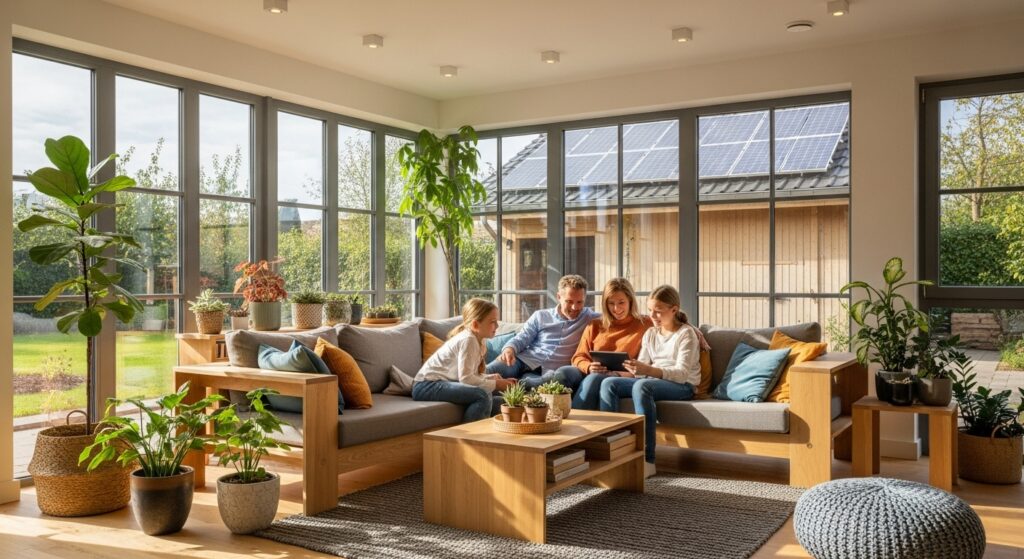
In the last decade, Europe has entered a new stage of sustainability. As part of the European Green Deal, countries are enforcing stricter energy efficiency laws to reduce carbon emissions in construction. Buildings must now meet higher insulation standards, pushing the aluminum door and window industry to upgrade.

💡 2. Understanding EU Energy Efficiency Standards for Windows
The European Union introduced the Energy Performance of Buildings Directive (EPBD) and EN ISO 10077 standards, defining strict U-values (thermal transmittance) for doors and windows.
For instance, in Northern Europe, the required U-value can be as low as 1.0 W/m²·K, meaning manufacturers must use insulated profiles, thermal breaks, and double or triple glazing.
🧰 3. How Aluminum Adapts: Innovation in Thermal Performance
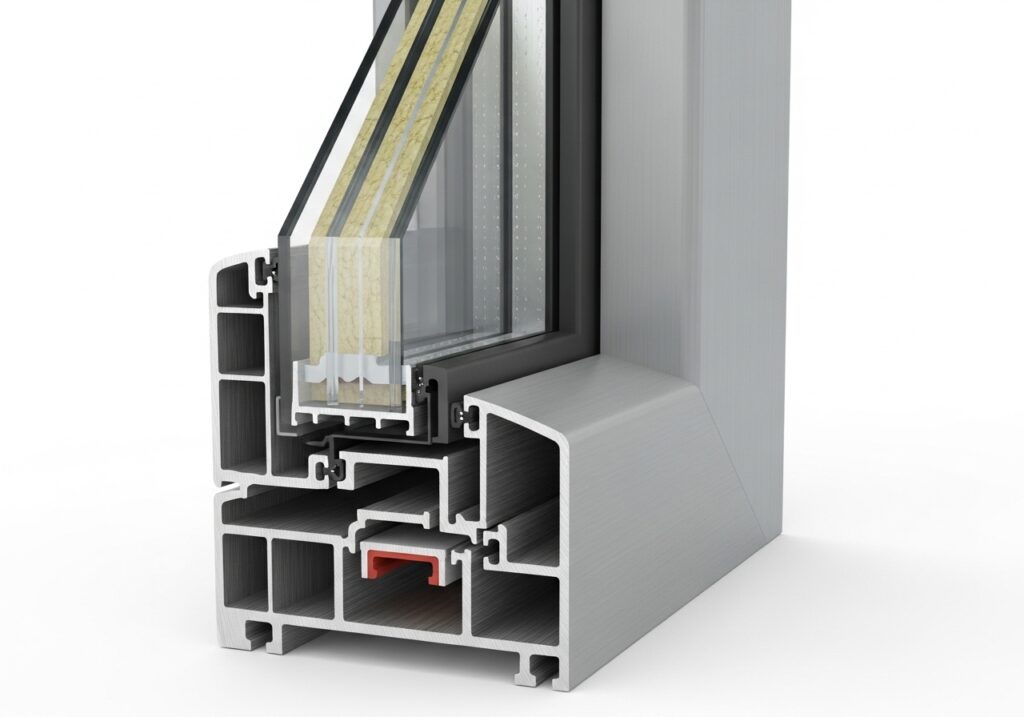
Aluminum’s natural conductivity once made it less energy-efficient than PVC or wood. However, modern thermal break technology and low-emissivity coatings have changed that.
Manufacturers now integrate polyamide strips and insulated chambers, achieving excellent heat retention while maintaining aluminum’s strength and aesthetics.
🏗️ 4. Sustainability and Circular Economy: The New Business Imperative
European policies now favor materials that can be recycled, reused, or have low embodied carbon.
Aluminum fits perfectly into this framework — it’s 100% recyclable and retains quality even after multiple uses.
Companies that adopt eco-certifications like Cradle to Cradle (C2C) or Environmental Product Declarations (EPD) gain an edge in EU tenders and construction contracts.
🧾 5. CE Marking and Certification Requirements for Exporters
To export to the EU, aluminum door and window products must obtain CE certification, proving compliance with European safety, thermal, and acoustic standards.
Testing involves:
• U-value and wind load resistance
• Air and water tightness
• Acoustic performance
• Environmental sustainability
🌐 6. What It Means for Chinese Manufacturers
For manufacturers in China, adapting to EU standards means opportunity. By upgrading product performance, emphasizing sustainability, and pursuing CE or EPD certification, exporters can tap into one of the world’s most advanced and lucrative construction markets.
📈 7. Market Outlook: Demand and Opportunity
According to Eurostat data, the EU construction market for aluminum doors and windows is expected to grow 4.2% annually through 2030, driven by retrofitting projects and green housing policies.
This steady growth offers long-term potential for exporters with competitive pricing and sustainable design.
🌏 8. Conclusion: Building a Greener Future Together
Europe’s energy transformation is not just about regulation — it’s about innovation, cooperation, and shared responsibility.
Manufacturers who embrace these standards today will define the global construction landscape of tomorrow.
📞 Contact Openhaus
📧 Email:openhausliving@gmail.com
🌐 Website: https://openhausliving.com
🔺 YouTube: https://youtube.com/@openhausliv?si=dktMp7xiL4ubtP28
📱 WhatsApp: +86 17623790407