How to Choose Energy-Efficient Aluminum Windows for Cold Climates
openhaus
In regions like Kazakhstan, Russia, and Northern Europe, winters are long and freezing. Choosing the right energy-efficient aluminum windows and doors can significantly reduce heating costs and improve comfort.
1. Why Aluminum Windows Are Ideal for Cold Climates
Modern aluminum profiles with thermal break technology provide excellent insulation while maintaining durability and elegant appearance.
Main Advantages:
• 🌡️Thermal insulation reduces heat loss
• 💨Airtight sealing keeps cold air out
• 🔇Double or triple glazing ensures quiet and comfort
• 🧊Withstands -30°C without deformation
2.Key Factors to Consider
1.Profile Design: Look for thermal-break aluminum (PA66 material).
2.Glass Type: Double or triple glazed, Low-E coated glass is recommended.
3.Sealing: EPDM weather-stripping prevents air and dust leakage.
4.Hardware: Quality hinges and locks ensure long-term reliability.
3. Why Choose Openhausmates
Based in Chongqing, China, Openhaus has over 10 years of manufacturing experience in high-quality aluminum doors and windows. We designed a special “Kazakhstan Thermal Series” with:
🌍 Why Aluminum Windows Are Popular in Kazakhstan’s Building Projects
Kazakhstan
🏗️ Market Overview
In recent years, Kazakhstan’s construction industry has experienced steady growth, driven by urbanization and modern housing demand. Developers and contractors are seeking materials that combine durability, design flexibility, and energy efficiency — and aluminum windows perfectly meet these needs.
💪 1. Strength and Durability
Kazakhstan’s harsh winters and strong winds demand windows that can withstand extreme conditions. Aluminum frames resist deformation, cracking, and corrosion even at -30°C, making them ideal for both residential and commercial buildings.
🌡️ 2. Excellent Thermal Insulation
Modern aluminum windows now feature thermal break technology — a barrier that prevents heat transfer between the inside and outside. When paired with Low-E glass and airtight sealing, they help reduce heating costs and keep indoor spaces warm.
🎨 3. Modern Design Flexibilityn
Architects in Kazakhstan increasingly prefer aluminum for its sleek appearance and customizable options. From large panoramic windows to minimalist sliding doors, aluminum systems allow for versatile designs while maintaining structural strength.
💰 4. Cost-Effective and Long-Lasting
Compared to PVC or wooden frames, aluminum windows require less maintenance and have a longer lifespan. This makes them a smart long-term investment for both builders and homeowners.
🌿 5. Eco-Friendly and Recyclable
As Kazakhstan moves toward green building standards, aluminum has gained popularity due to its 100% recyclability and low environmental impact during manufacturing.
🏠 Conclusion
Aluminum windows represent the future of sustainable construction in Kazakhstan — combining strength, beauty, and efficiency. With over 10 years of manufacturing experience, Openhaus provides custom aluminum doors and windows designed for cold climates like Kazakhstan.
🌎 Global Supply Chain Impact on Aluminum Door & Window PricesBuying Guide
Introduction
In recent years, global supply chain disruptions — from raw material shortages to fluctuating shipping costs — have profoundly impacted the aluminum door and window industry. For manufacturers, distributors, and customers alike, understanding how these factors shape final prices is crucial for making informed decisions.
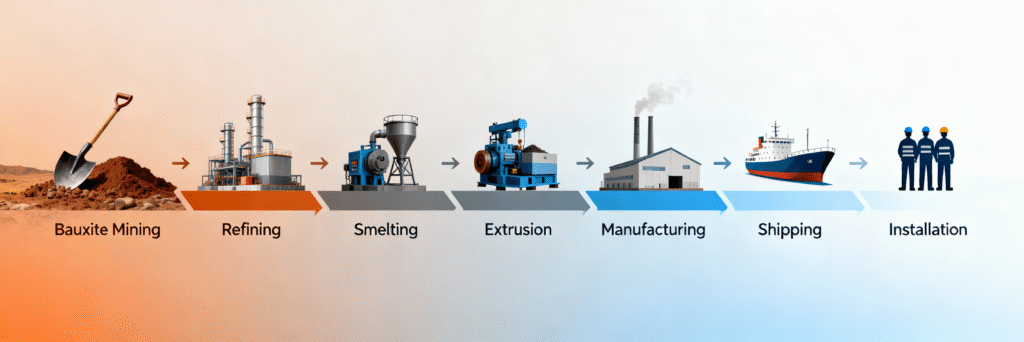
⚙️ 1. The Core Components of Aluminum Supply Chain
Global Aluminum Supply Chain Diagram
The aluminum door and window supply chain involves several key stages:
• Raw Aluminum Production — Mined from bauxite, refined into alumina, then smelted into aluminum ingots.
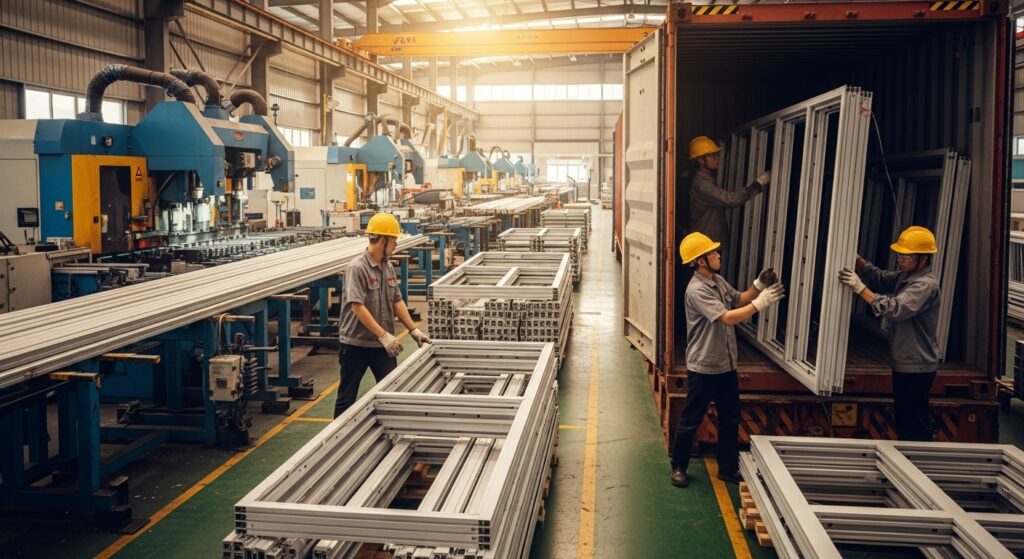
• Extrusion & Fabrication — Manufacturers shape the aluminum into profiles and components.
• Transportation & Logistics — Shipping from factories (often in China) to global markets such as Central Asia, Europe, and the Middle East.
• Retail & Installation — The final delivery to end users.
📉 2. How Global Supply Chains Affect Aluminum Prices
🔸 ① Raw Material Volatility
When bauxite or alumina mining is restricted (e.g., due to export bans in Indonesia or Guinea), global aluminum prices rise.
🔸 ② Energy Cost
Aluminum smelting consumes vast energy. Rising oil or electricity costs — especially in Europe and China — directly increase manufacturing expenses.
🔸 ③ Shipping & Logistics Delays
During the pandemic, container shortages and port congestion doubled or tripled freight costs, which many factories had to pass on to buyers.
🔸 ④ Exchange Rate Fluctuations
The USD/RMB exchange rate affects export competitiveness. A strong dollar can make Chinese products relatively cheaper for overseas buyers.
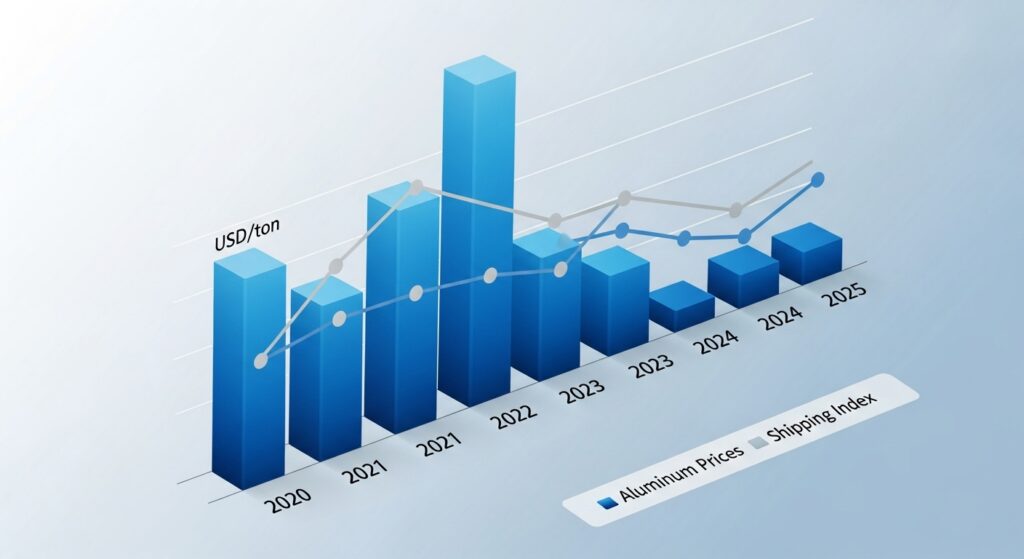
🌐 3. Case Study: Aluminum Window Prices 2020–2025
Aluminum & Freight Price Trend Chart
Year
Global Aluminum Price (USD/ton)
Shipping Index
Average Window Price (USD/m²)
2020
1,750
100
65
2021
2,400
180
78
2022
2,950
240
88
2023
2,400
160
80
2024
2,100
140
76
2025
2,300 (est.)
150 (est.)
79 (est.)
Insight: Even small changes in global shipping or raw aluminum costs can lead to 10–15% swings in retail door and window prices.
🚢 4. China’s Role in the Global Supply Chain
Global Trade Routes Map
China remains the world’s largest producer and exporter of aluminum products. With its mature extrusion technology, integrated logistics, and cost advantages, Chinese manufacturers have become vital suppliers for Central Asia, Europe, and the Middle East.
Tip for importers: Working directly with factories in Chongqing or Guangdong can reduce costs by up to 20% compared to intermediary purchases.
💰 5. How to Manage Price Risks
Long-Term Contracts — Fix aluminum prices with suppliers in advance.
Diversify Supply Sources — Combine China, Turkey, and local suppliers to mitigate risks.
Monitor Exchange Rates — Lock in favorable currency rates for bulk orders.
Optimize Shipping Routes — Use nearby ports such as Qingdao or Lianyungang for Central Asia shipments.
Invest in Efficiency — Use recycled aluminum and automation to reduce costs.
🧭 6. Future Outlook: Supply Chain 2.0
As global trade becomes more digital and regionalized, transparency and sustainability will define the next decade of the aluminum industry. Smart logistics, carbon-neutral production, and AI-driven supply chain management are emerging as new competitive edges.
🏁 Conclusion
The price of aluminum windows and doors is no longer determined solely by factory production costs. It’s the outcome of a complex global system — one that connects energy, logistics, and geopolitics. Understanding this system helps buyers and suppliers make smarter, more stable decisions.